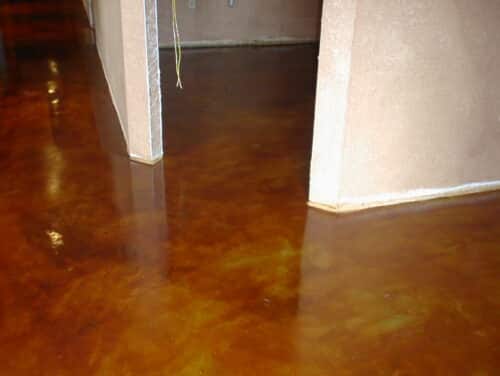
How to Acid Stain a Concrete Floor
Acid stain isn't paint. It's a chemical reaction. The stain penetrates your concrete and reacts with the minerals inside the slab, creating rich, translucent color that won't chip, peel, or fade. Every floor comes out different because every slab has a different mineral makeup — that's what gives acid-stained concrete its one-of-a-kind, marbled look.
It's one of the most affordable ways to transform a plain concrete floor into something that looks like natural stone. And you can do it yourself. Basements, garages, patios, restaurants, offices — acid stain works on all of them.
Below is our complete process. We've shipped thousands of acid stain orders and helped customers troubleshoot every kind of floor. This is the method that works.
What You'll Need
Gather everything before you start. You don't want to stop mid-stain to run to the store.
- Safety gear: Gloves, eye protection, respirator. Acid stain is a chemical product — treat it with respect.
- Surface prep: Concrete DNA Satellite pad (30 grit), low-speed floor buffer, black cleaning pad.
- Cleaner: Super Blue (diluted 1:9 with water). This opens up the concrete pores safely — no muriatic acid needed.
- Degreaser (if needed): Citra Pro for oil and grease stains.
- Acid stain: Pick your color. We carry 13 shades, from earthy browns and tans to greens, blues, and black. Not sure which one? Grab a sample kit and test on your actual concrete first.
- Plastic pump sprayer: A cheap one-gallon sprayer works fine. Must be all-plastic — metal parts will corrode.
- Repair product (if needed): Our Instant Medic – Hard is a cementitious repair product for cracks and spalls. These products accept stain, but they'll stain a different shade than the surrounding concrete.
- Sealer (interior): Super Prime as base coat + WB Urethane (Gloss or Matte) as topcoat.
- Sealer (exterior): Crete Seal Plus EXT in Gloss or Matte.
- Tape and masking: Painter's tape and plastic sheeting to protect walls and adjacent surfaces.
- Squeegee and wet/dry vac: For removing water during prep.
Coverage
Plan on
150–300 square feet per gallon of acid stain, depending on how porous your concrete is and how heavy you apply. Rough, broom-finished concrete soaks up more stain. Smooth, troweled concrete uses less.
For a 400 sq ft garage floor, figure on 1.5–2 gallons to be safe. If you're doing a second coat for deeper color, double that.
Step 1: Clean and Repair the Floor
This is where most people cut corners. Don't. If there's anything between the stain and the concrete — old sealer, paint, oil, dust, drywall mud — the stain can't react with the slab. You'll get dead spots.
Start by removing any coatings, adhesives, or visible contaminants. Use
Citra Pro for grease and oil stains. For general cleaning, run a black cleaning pad on a low-speed floor buffer with water.
Fill any cracks or spalls with a cementitious repair product like our
Instant Medic – Hard before you stain. Just know that repaired areas will react differently and show a slightly different color. That's normal.
Important: Do NOT use muriatic acid to clean the floor. It burns the concrete and strips out the minerals the stain needs to react. Use
Super Blue instead — it's a safe alternative that opens up the pores without damaging the surface.
Step 2: Profile the Surface
This is the step most tutorials skip, and it's one of the most important. You need to create a surface profile (called a CSP — Concrete Surface Profile) for two reasons: so the stain can penetrate the concrete, and more importantly, so the sealer bonds properly and doesn't peel later.
For interior concrete: Run a
Concrete DNA Satellite pad (30 grit) under a low-speed floor buffer with plenty of water. Add
Super Blue diluted 1:9 with water to help open the concrete. After cleaning with Super Blue, do a rinse pass with just clean water to remove any residual cleaner. Squeegee and vac up the water.
For exterior concrete: Outside slabs are usually more porous and broom-finished already. A diluted application of Super Blue followed by a thorough water rinse is typically enough.
Let the floor dry until the surface appears dry before moving to the next step. Lightly mop to catch any remaining dust or footprints.
Step 3: Mask Off Your Work Area
Tape and mask anything you don't want stained. Walls, baseboards, door frames, adjacent flooring — acid stain will color anything it touches. Use painter's tape and plastic sheeting. If you're working indoors, open windows or run fans for ventilation.
Step 4: Apply the Acid Stain
Put the stain in your plastic pump sprayer. Before you spray the floor, test the pattern on a piece of cardboard or an inconspicuous spot to make sure the spray is doing what you want.
Spray the stain onto the floor, making sure you get 100% coverage. Keep your spray movements evenly erratic — you don't want a consistent back-and-forth pattern because the stain will dry looking exactly like your motions. Random, overlapping circular movements look the most natural.
You can also brush the stain around with a broom or even blow it with a blower to create decorative effects. Remember: this is a reactive stain, so your movements directly affect the final look.
Let the stain dry completely. When it's dry, it's done reacting — typically 2–8 hours depending on temperature, humidity, and your concrete. Want a darker result? Apply a second coat after the first is dry.
Pro tip: Do a small mock-up area before committing to the whole floor. Every slab reacts differently. A test patch lets you check the color intensity and adjust your technique before you're locked in.
Step 5: Rinse and Remove Residue
After the stain has finished reacting, you'll see a chalky residue on the surface. This is normal — it's a byproduct of the chemical reaction.
Thoroughly rinse the floor with water and wet mop to remove all residue. Use plenty of water and make multiple passes. You can add a little baking soda to the rinse water if you want, but our acid stain doesn't require formal neutralization. The key is to keep rinsing until there's no chalky film left.
Do NOT seal over residue. If you trap that chalky layer under the sealer, it'll cause adhesion problems.
Step 6: Seal the Floor
Let the floor dry completely — at least 24 hours, preferably overnight. Moisture from prep and rinsing needs to be fully out of the concrete before you seal. If you trap moisture under the sealer, it can cloud or blister.
For interior floors: Apply a coat of
Super Prime as your base, then follow with
WB Urethane (available in Gloss or Matte). The urethane is a 2-component water-based formula with excellent adhesion and durability. Plan on two coats of sealer for an even finish.
For exterior projects: Use
Crete Seal Plus EXT in your choice of Gloss or Matte. This is an acrylic sealer designed for outdoor exposure.
Maintenance: Use
EZ Clean as your periodic floor cleaning soap to keep the sealed surface looking good.
If you need to protect the floor from construction traffic after sealing, lay down paper — but never tape paper directly to the floor.
What to Expect: 2-Day Job Timeline
Here's a realistic schedule for an interior acid stain project. Most jobs wrap up in two days.
Day 1
- 8:00 AM – 12:00 PM: Prep the floor with Concrete DNA Satellite pads and clean. This is the longest step — don't rush it.
- 12:00 PM: Apply acid stain.
- 4:00 PM: Clean acid residue and rinse the floor. Let dry overnight.
Day 2
That's it. A weekend project for most DIYers. Larger floors or floors with heavy contamination may take longer on the prep side, but the stain-and-seal portion stays the same.
Indoor vs. Outdoor: What's Different?
The stain application itself is the same. The differences are in prep and sealing:
- Prep: Interior floors get diamond-pad profiling. Exterior floors are usually porous enough that Super Blue alone handles it.
- Sealer: Interior gets the Super Prime + WB Urethane system for maximum durability and that rich "wet look." Exterior gets Crete Seal Plus EXT, which handles UV, rain, and temperature swings.
- Color choice: Acid stain is actually the better option for outdoor concrete because the color is permanent and part of the slab. It won't chip or peel even with weather exposure. All 13 of our colors work outdoors.
Acid Stain vs. Water-Based Stain
Quick comparison since this comes up a lot:
Acid stain creates a natural, mottled marbling effect through a chemical reaction. The color is permanent and part of the slab. Every floor is unique. Color palette is mostly earth tones (browns, tans, greens, blues, blacks). Best for outdoor concrete.
Water-based stain gives a more uniform, consistent look with a much wider range of colors. It sits closer to the surface rather than reacting chemically. Better when you want precise color matching.
Both have their place. If you want that natural stone look with one-of-a-kind character, acid stain is your move.
Frequently Asked Questions
How long does acid stain take to react?
Most acid stains finish reacting in 2–8 hours depending on temperature, humidity, and how porous your concrete is. You'll know it's done when the stain is dry to the touch. If you want deeper color, apply a second coat after the first has dried.
Do you have to neutralize acid stain?
Our acid stain does not require formal neutralization. After the stain dries and finishes reacting, rinse the floor thoroughly with water to remove the chalky residue. You can add a little baking soda to the rinse water if you prefer, but plenty of clean water and multiple passes is what matters most. Never seal over residue.
How much area does a gallon of acid stain cover?
One gallon covers approximately 150–300 square feet, depending on the porosity and texture of your concrete. Rough, broom-finished surfaces absorb more stain. Smooth, troweled surfaces use less. If you're applying two coats, double your estimate.
Can you acid stain old concrete?
Yes, as long as the surface is clean and free of sealers, paint, and coatings. Older concrete may react differently than newer slabs — and some very old or heavily worn concrete may have a reduced reaction. That's why we always recommend doing a test patch first with a
sample kit.
Can you acid stain a basement floor?
Absolutely. Basements are one of the most popular applications for acid stain. The concrete is already there, the look is modern and clean, and if the basement ever takes on water, a stained concrete floor handles it far better than carpet or laminate. Just make sure the slab isn't trapping moisture from below — do a plastic sheet test (tape plastic to the floor for 24 hours and check for condensation underneath) before staining.
What sealer should I use over acid stain?
For interior floors, we recommend
Super Prime as a base coat followed by our
WB Urethane in Gloss or Matte. For exterior projects, use
Crete Seal Plus EXT. The sealer enriches the stain color and protects the surface. Always apply at least two coats.
What's the difference between acid stain and concrete paint?
Paint sits on top of the concrete surface. It can chip, peel, and flake over time, especially in high-traffic areas. Acid stain penetrates the concrete and becomes part of the slab through a chemical reaction. The color is permanent — it doesn't chip or peel because there's nothing sitting on the surface to come off.
Can I mix or layer acid stain colors?
Yes. You can apply a base color and then add a second color while the first is still wet or after it's dried for different effects. Layering creates depth and variation. Experiment on a test area first to see how the colors interact on your specific slab.
[
{
"@context": "https://schema.org",
"@type": "HowTo",
"name": "How to Acid Stain a Concrete Floor",
"description": "Step-by-step guide to acid staining concrete floors, covering surface prep, stain application, residue removal, and sealing with product recommendations from Concrete Floor Supply.",
"totalTime": "PT48H",
"estimatedCost": {
"@type": "MonetaryAmount",
"currency": "USD",
"value": "75-200"
},
"supply": [
{ "@type": "HowToSupply", "name": "Acid stain (color of choice)" },
{ "@type": "HowToSupply", "name": "Super Blue concrete cleaner" },
{ "@type": "HowToSupply", "name": "Citra Pro degreaser (if needed)" },
{ "@type": "HowToSupply", "name": "Super Prime sealer base coat (interior)" },
{ "@type": "HowToSupply", "name": "WB Urethane Gloss or Matte topcoat (interior)" },
{ "@type": "HowToSupply", "name": "Crete Seal Plus EXT (exterior)" },
{ "@type": "HowToSupply", "name": "Instant Medic – Hard crack repair (if needed)" }
],
"tool": [
{ "@type": "HowToTool", "name": "Concrete DNA Satellite pad (30 grit)" },
{ "@type": "HowToTool", "name": "Low-speed floor buffer" },
{ "@type": "HowToTool", "name": "Black cleaning pad" },
{ "@type": "HowToTool", "name": "All-plastic pump sprayer" },
{ "@type": "HowToTool", "name": "Squeegee and wet/dry vacuum" },
{ "@type": "HowToTool", "name": "Painter's tape and plastic sheeting" },
{ "@type": "HowToTool", "name": "Gloves, eye protection, and respirator" }
],
"step": [
{
"@type": "HowToStep",
"position": 1,
"name": "Clean and Repair the Floor",
"text": "Remove all coatings, paint, oil, adhesives, and contaminants from the concrete. Use Citra Pro for grease stains and a black cleaning pad on a floor buffer for general cleaning. Fill cracks with Instant Medic – Hard. Do NOT use muriatic acid — use Super Blue diluted 1:9 with water instead.",
"url": "https://www.concretefloorsupply.com/how-to-acid-stain-a-concrete-floor/#step-1"
},
{
"@type": "HowToStep",
"position": 2,
"name": "Profile the Surface",
"text": "Create a concrete surface profile (CSP) so the stain penetrates and the sealer bonds properly. For interior concrete, run a Concrete DNA Satellite pad (30 grit) under a low-speed floor buffer with Super Blue diluted 1:9. For exterior, apply diluted Super Blue and rinse thoroughly. Let the floor dry completely.",
"url": "https://www.concretefloorsupply.com/how-to-acid-stain-a-concrete-floor/#step-2"
},
{
"@type": "HowToStep",
"position": 3,
"name": "Mask Off Your Work Area",
"text": "Use painter's tape and plastic sheeting to protect walls, baseboards, door frames, and any surfaces you don't want stained. Open windows or use fans for ventilation if working indoors.",
"url": "https://www.concretefloorsupply.com/how-to-acid-stain-a-concrete-floor/#step-3"
},
{
"@type": "HowToStep",
"position": 4,
"name": "Apply the Acid Stain",
"text": "Pour stain into an all-plastic pump sprayer. Spray the floor with 100% coverage using evenly erratic, overlapping circular motions. Avoid consistent back-and-forth patterns. One gallon covers approximately 150–300 sq ft. Let the stain dry and react (typically 2–8 hours). Apply a second coat for deeper color if desired.",
"url": "https://www.concretefloorsupply.com/how-to-acid-stain-a-concrete-floor/#step-4"
},
{
"@type": "HowToStep",
"position": 5,
"name": "Rinse and Remove Residue",
"text": "After the stain finishes reacting, thoroughly rinse the floor with water and wet mop to remove all chalky residue. Make multiple passes until no film remains. Baking soda can be added to the rinse water but is not required. Do not seal over residue.",
"url": "https://www.concretefloorsupply.com/how-to-acid-stain-a-concrete-floor/#step-5"
},
{
"@type": "HowToStep",
"position": 6,
"name": "Seal the Floor",
"text": "Let the floor dry at least 24 hours. For interior floors, apply Super Prime as a base coat followed by WB Urethane (Gloss or Matte) as topcoat. For exterior, use Crete Seal Plus EXT. Apply at least two coats of sealer for an even finish.",
"url": "https://www.concretefloorsupply.com/how-to-acid-stain-a-concrete-floor/#step-6"
}
]
},
{
"@context": "https://schema.org",
"@type": "FAQPage",
"mainEntity": [
{
"@type": "Question",
"name": "How long does acid stain take to react?",
"acceptedAnswer": {
"@type": "Answer",
"text": "Most acid stains finish reacting in 2–8 hours depending on temperature, humidity, and concrete porosity. The stain is done reacting when it's dry to the touch. Apply a second coat after the first dries for deeper color."
}
},
{
"@type": "Question",
"name": "Do you have to neutralize acid stain?",
"acceptedAnswer": {
"@type": "Answer",
"text": "Concrete Floor Supply acid stain does not require formal neutralization. After the stain dries and finishes reacting, rinse the floor thoroughly with water to remove the chalky residue. You can add baking soda to the rinse water if desired, but thorough rinsing with clean water is what matters most."
}
},
{
"@type": "Question",
"name": "How much area does a gallon of acid stain cover?",
"acceptedAnswer": {
"@type": "Answer",
"text": "One gallon of acid stain covers approximately 150–300 square feet, depending on the porosity and texture of the concrete. Rough, broom-finished surfaces absorb more stain. If applying two coats, double your estimate."
}
},
{
"@type": "Question",
"name": "Can you acid stain old concrete?",
"acceptedAnswer": {
"@type": "Answer",
"text": "Yes, as long as the surface is clean and free of sealers, paint, and coatings. Older concrete may react differently than newer slabs, and very old or heavily worn concrete may have a reduced reaction. Always do a test patch first with a sample kit."
}
},
{
"@type": "Question",
"name": "Can you acid stain a basement floor?",
"acceptedAnswer": {
"@type": "Answer",
"text": "Yes, basements are one of the most popular applications for acid stain. Stained concrete handles moisture better than carpet or laminate. Before staining, do a plastic sheet test — tape plastic to the floor for 24 hours and check for condensation underneath to rule out moisture issues."
}
},
{
"@type": "Question",
"name": "What sealer should I use over acid stain?",
"acceptedAnswer": {
"@type": "Answer",
"text": "For interior floors, use Super Prime as a base coat followed by WB Urethane (Gloss or Matte) as a topcoat. For exterior projects, use Crete Seal Plus EXT. The sealer enriches the stain color and protects the surface. Always apply at least two coats."
}
},
{
"@type": "Question",
"name": "What's the difference between acid stain and concrete paint?",
"acceptedAnswer": {
"@type": "Answer",
"text": "Paint sits on top of concrete and can chip, peel, and flake. Acid stain penetrates the concrete and becomes part of the slab through a chemical reaction, creating permanent color that won't chip or peel."
}
},
{
"@type": "Question",
"name": "Can I mix or layer acid stain colors?",
"acceptedAnswer": {
"@type": "Answer",
"text": "Yes, you can apply a base color and add a second color while the first is still wet or after it dries for different effects. Layering creates depth and variation. Test on a small area first to see how colors interact on your specific slab."
}
}
]
},
{
"@context": "https://schema.org",
"@type": "VideoObject",
"name": "How to Acid Stain a Concrete Floor",
"description": "Watch the complete acid stain application process from Concrete Floor Supply, covering surface prep, stain application, and finishing.",
"thumbnailUrl": "https://vumbnail.com/575895652_medium.jpg",
"uploadDate": "2021-07-15",
"contentUrl": "https://vimeo.com/575895652",
"embedUrl": "https://player.vimeo.com/video/575895652",
"publisher": {
"@type": "Organization",
"name": "Concrete Floor Supply",
"logo": {
"@type": "ImageObject",
"url": "https://www.concretefloorsupply.com/wp-content/uploads/2018/04/cropped-logoslog.png"
}
}
},
{
"@context": "https://schema.org",
"@type": "VideoObject",
"name": "Step 2. How to Properly Apply Acid Stain to Your Concrete Floors",
"description": "Acid stain application demonstration by Concrete Floor Supply.",
"thumbnailUrl": "https://i3.ytimg.com/vi/ntpCC8BD68o/hqdefault.jpg",
"uploadDate": "2017-06-11",
"contentUrl": "https://www.youtube.com/watch?v=ntpCC8BD68o",
"embedUrl": "https://www.youtube.com/embed/ntpCC8BD68o",
"publisher": {
"@type": "Organization",
"name": "Concrete Floor Supply",
"logo": {
"@type": "ImageObject",
"url": "https://www.concretefloorsupply.com/wp-content/uploads/2018/04/cropped-logoslog.png"
}
}
},
{
"@context": "https://schema.org",
"@type": "VideoObject",
"name": "Step 3. Part 2. Everything You Need to Seal Stained Concrete Floors",
"description": "Acid stain floor sealing process by Concrete Floor Supply.",
"thumbnailUrl": "https://i3.ytimg.com/vi/ziFO89xIcvo/hqdefault.jpg",
"uploadDate": "2017-06-26",
"contentUrl": "https://www.youtube.com/watch?v=ziFO89xIcvo",
"embedUrl": "https://www.youtube.com/embed/ziFO89xIcvo",
"publisher": {
"@type": "Organization",
"name": "Concrete Floor Supply",
"logo": {
"@type": "ImageObject",
"url": "https://www.concretefloorsupply.com/wp-content/uploads/2018/04/cropped-logoslog.png"
}
}
},
{
"@context": "https://schema.org",
"@type": "VideoObject",
"name": "Acid Stain Neutralizing After it Has Dried",
"description": "How to clean and rinse acid stain residue from concrete floors after the stain has dried and finished reacting.",
"thumbnailUrl": "https://i3.ytimg.com/vi/AYHeOsnxGbw/hqdefault.jpg",
"uploadDate": "2017-11-13",
"contentUrl": "https://www.youtube.com/watch?v=AYHeOsnxGbw",
"embedUrl": "https://www.youtube.com/embed/AYHeOsnxGbw",
"publisher": {
"@type": "Organization",
"name": "Concrete Floor Supply",
"logo": {
"@type": "ImageObject",
"url": "https://www.concretefloorsupply.com/wp-content/uploads/2018/04/cropped-logoslog.png"
}
}
}
]